Office Cleaning Brampton
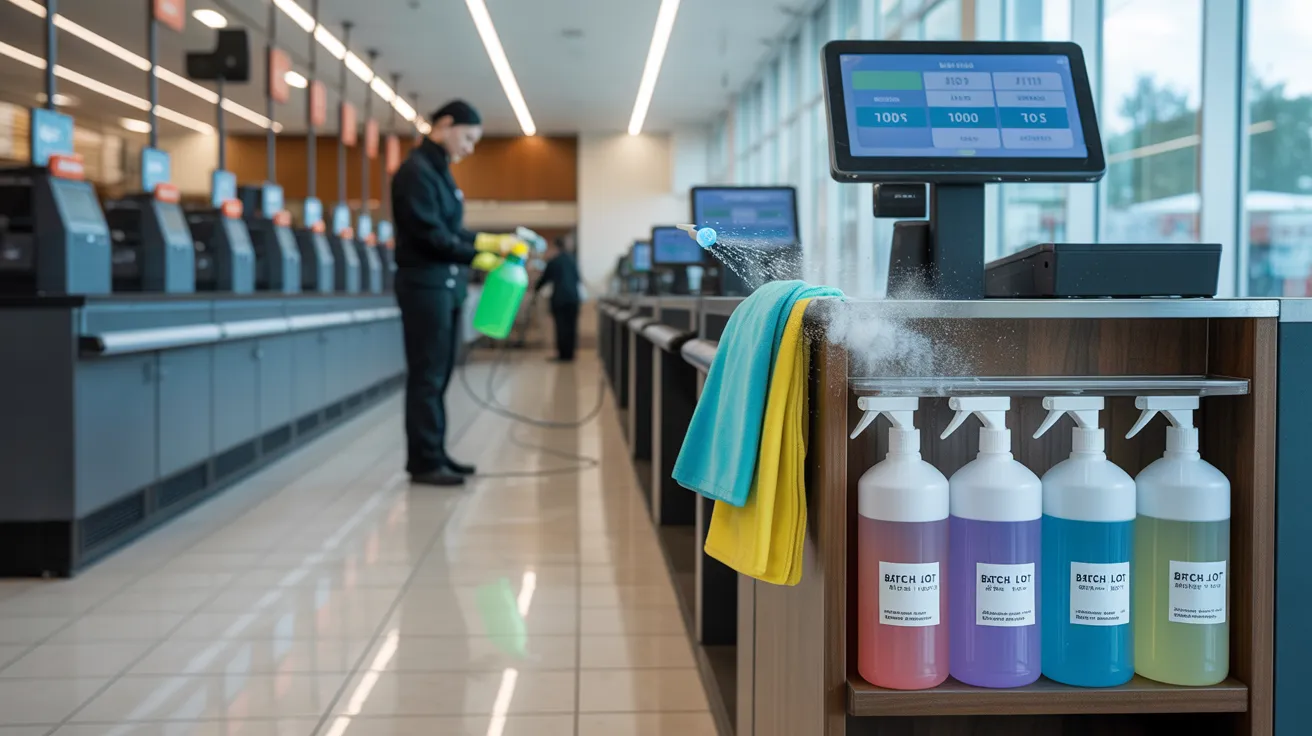
Discover Brampton commercial cleaning and sanitation specialists who follow CSA, WHMIS, and Peel Public Health. You'll get SOPs, SDS access, batch/lot traceability, precise mixing records, and time-tracked evidence. We validate disinfection with ATP/fluorescence, maintain dwell times, and employ ECOLOGO/Green Seal, DIN/EPA-registered products. Staff functions off-peak with security protocols, color-coded tools, and secure tracking for disinfectants. Traceable records, CAPA workflows, and industry-specific protocols (office, retail, healthcare, industrial) are included. Learn how we minimize interference while enhancing adherence.
Key Takeaways
- Comprehensive SOPs following CSA, WHMIS, and Peel Public Health guidelines with fully auditable documentation including complete SDS libraries, lot tracking systems, and time-verified service documentation.
- Risk-based sanitation protocol: including comprehensive touchpoint mapping, EPA-registered disinfectants, validated contact duration, ATP and fluorescence testing, and scheduled third‑party microbiological analysis.
- Operational efficiency: utilizing off-peak scheduling, micro-crews, entry management, chain-of-custody for chemicals, and calibrated dispensing with equipment documentation.
- Environmental leadership: Green Seal/ECOLOGO certified solutions, closed-loop dilution systems, innovative microfiber solutions, detailed waste assessments, and ISO 14001-aligned sustainability KPIs.
- Thorough quality assurance with supervisor audits, CAPA workflows, training documentation, and compliance documentation customized for municipal requirements, insurance standards, and regulatory bodies.
Why Professional Cleaning Matters for Brampton Businesses
Although routine tidying maintains surface appearances, expert cleaning validates your Brampton premises meets safety, health, and compliance protocols. It's essential to have documented procedures that align with local regulations, verified cleaning products, and properly calibrated equipment to mitigate contamination risks and liability. Trained professionals utilize proven operational procedures, designated tools by color, and controlled contact duration to guarantee effective pathogen elimination and surface clearing while protecting materials.
You can expect comprehensive assessments that track movement flows, interaction points, and air system influence, then establish measurable frequencies and QA checks. Environmental factors are crucial: winter conditions require doorway washing and matting upkeep; summer humidity requires dehumidification support and mold prevention; spring and fall bring environmental elements that need advanced filtration and overhead maintenance. Detailed records, safety data sheet access, and disposal protocols simplify inspections and demonstrate adherence.
Business Segments: Offices, Retail, Healthcare, and Industrial
Your facility demands sanitation procedures that match business facility standards-high-contact surface sanitization, flooring maintenance schedules, and waste segregation-while following local health and safety bylaws. For healthcare, you need CSA- and IPAC-compliant procedures, Environmental Protection Agency certified cleaners, verified contact duration, and detailed records for biohazard handling. In industrial settings, it's necessary to maintain WHMIS/GHS labeling, safety lockout procedures, particulate filtration systems, and inspection-ready protocols.
Office and Retail Protocols
When business activities cover offices, retail floors, healthcare facilities, and industrial sites, sanitation procedures need to comply with industry-specific requirements and measurable quality standards. In offices and retail, you'll codify timing, methodology, and confirmation protocols per section. Use layout planning to map high-traffic areas, contact points, and surface requirements, before arranging tasks based on risk categories. Define surface-compatible chemistries, dilution ratios, and dwell times; maintain safety data sheet accessibility and equipment calibration records.
Establish workplace standards for: glove changes across zones, cord organization, quiet-hours procedures, and safety signage for fall protection. Implement a color-based organization for supplies to eliminate contamination between areas in facility zones and common areas. Plan systematic vacuum maintenance, microfiber system updates, and disposal segregation. Assess outcomes using ATP testing, documentation systems, and remediation processes aligned with quality thresholds and customer SLAs.
Healthcare and Industrial Standards
Due to healthcare and industrial environments possess higher risk profiles, we utilize proven procedures that meet regulations and withstand audit scrutiny. You get site-specific Standard Operating Procedures compliant with CSA, Public Health Ontario, and OSHA/WHMIS standards. We deploy color-coded tools, closed-loop chemical dilution, and barcode-logged activities to ensure traceability, infection control, and contamination mitigation.
In our clinical settings, we implement Spaulding classifications, carry out terminal cleaning, and employ EPA-registered disinfectants with documented wet contact times. We validate outcomes through ATP verification and thorough audit checklists. Areas containing sharps receive puncture-resistant waste management and detailed chain-of-custody monitoring.
In industrial settings, we execute LOTO coordination, combustible dust control, and non-sparking tool implementation. Surface degreasing is performed with slip-coefficient testing. We maintain instrument accuracy, maintain SDS libraries, conduct hazard communication education, and produce compliance reports satisfying your audit requirements and insurance standards.
Advanced Disinfection Protocols for High-Traffic Zones
Although regular cleaning removes visible soil, advanced disinfection protocols focus on microbial colonies on high-touch surfaces with validated, measurable steps. You should commence with touchpoint mapping to inventory shared equipment, door fixtures, handrails, light switches, faucets, elevator controls, and payment terminals. Determine risk categories, define dwell times per EPA-registered disinfectant, and document material compatibility to avoid surface degradation. Standardize sequence: pre-clean, apply, maintain wet contact, and verify.
Apply electrostatic spraying for comprehensive coating of complex surfaces; calibrate spray heads, confirm droplet size, and monitor pass speed. Perform adenosine triphosphate analysis or fluorescent indicators for immediate process verification, and arrange periodic independent microbial sampling for outcome validation. Educate staff on donning/doffing, label interpretation, and inventory control. Document production codes, time records, and staff identifiers for compliance preparation and incident traceability.
Sustainable Products and Environmental Practices
You'll choose green-certified cleaning agents that meet ECOLOGO or Green Seal standards and adhere to WHMIS and SDS documentation. You'll establish waste reduction strategies, featuring microfiber systems, dilution monitoring, reusable dispenser formats, and source-separated recycling according to Brampton and Ontario guidelines. You'll verify performance with VOC limits, biodegradability requirements, and monthly reviews to track compliance and sustained improvement.
Environmentally-Certified Cleaning Agents
Implement a higher compliance bar by specifying environmentally certified cleaning products that meet respected standards including ECOLOGO (UL 2792/2795), Green Seal (GS-37/GS-53), or EPA Safer Choice. In your green certification summary, record the product name, certification ID, dilution ratios, pH range, VOC content, and SDS references. Ensure third-party certifications on containers and confirm listings in each certifier's online registry.
Choose concentrates designed for microfiber applications, automatic scrubbers, and contact point procedures. Choose cleaning agents with rapid biodegradation, nonylphenol ethoxylate-free compositions, and low-aquatic-toxicity ratings. Establish residue limits to promote allergen reduction on heavily accessed zones and in indoor air quality-critical spaces. Implement closed-loop dispensing to eliminate waste and maintain ppm accuracy. Educate personnel on application periods for sanitizing options approved under Safer Choice's partner criteria. Conduct quarterly reviews, analyze residual compounds, and document variances with corrective actions.
Waste Reduction Strategies
While adhering to stringent hygiene standards, implement waste reduction by implementing sustainable and reusable systems across sites. Start with Waste audits to quantify material streams by volume, contamination levels, and disposal expenses per department. Use findings to select robust dispensers, concentrated chemicals, microfiber equipment with monitored washing and color-designated containers. Mandate vendor take-back for packaging and pallet recovery.
Implement compost programs for food waste from kitchens and break areas, verifying that collection bags meet ASTM D6400 and collection services will take them. Adjust waste removal frequency according to bin fill-level measurements to eliminate overflow issues and pest problems. Train personnel with standard operating procedures, informational displays, and regular training sessions. Monitor KPIs: material recovery rates, per-capita disposal, and incident nonconformities. Record procedures to satisfy municipal bylaws and ISO 14001 standards.
Smart Scheduling to Limit Downtime
To maintain smooth operations, customizable scheduling guarantees cleaning is conducted outside peak hours to prevent business interruptions and profit impact. You determine precise maintenance timeframes, backed with after-hours coordination, so teams operate when facility usage is minimal. We analyze your business schedule, exclusion windows, and official holidays, then align work procedures to avoid conflicts with incoming goods, reviews, and repairs.
To minimize disruption, we utilize rotating crews and dedicated units with comprehensive task checklists, scheduled workflows, and service level benchmarks. Staff members strictly follow environmental and sensory limitations, and apply quick-drying products to minimize waiting periods. Entry control, key tracking, and documentation systems ensure accountability. We systematically track operational metrics, problem resolution, and safety reporting to satisfy regulatory standards, workplace regulations, and local ordinances while preserving efficiency.
Deep Cleaning vs. Regular Maintenance: What to Know
Since risk management and compliance protocols change based on specific tasks, it's crucial to implement a clear separation between daily maintenance (scheduled cleaning to sustain cleanliness baselines) and thorough sanitization (periodic comprehensive cleaning that addresses challenging and priority areas). You should allocate daily upkeep to commonly touched surfaces, washrooms, flooring, and shared equipment using approved detergents, microfiber capture, and contact-time certified sanitizers. You need to document timing, safety gear, procedures, and inspection findings.
Plan deep cleaning as periodic maintenance guided by hazard mapping: critical areas including ceilings, HVAC systems, grout lines, equipment spaces, drains, and porous surfaces. Use bioluminescence or UV markers to validate cleaning effectiveness, escalate to HEPA systems, descalers, and steam treatment where biofilm formation is likely. Establish operational procedures, color identification, and tool isolation to prevent cross-contamination. Document observations, remedial measures, and follow-up schedules to sustain standards.
Health and Safety Standards Compliance
Your maintenance plan will only be effective if it aligns with statutory and industry requirements, so anchor every task to specific standards and maintain proof of conformity. Map each surface, chemical, and method to industry standards and regulatory requirements. Keep SDS libraries, dilution logs, lot tracking, and measurement verification logs. Educate staff on protective equipment protocols and safety measures. Establish color-coded tools and closed-loop chemical systems to avoid cross-contamination. Schedule internal audits, keep checklists, photos, and corrective actions to drive inspection readiness. Track regulatory updates from Peel Public Health and provincial authorities; revise SOPs, signage, and risk assessments accordingly. Confirm disinfectant contact times with ATP testing and log results. Restrict access to storage, mark secondary containers, and maintain ventilation checks with documented maintenance.
Expert Services for Post-Event and High-Volume Situations
Despite compressed maintenance timeframes during peak periods, you require rapid, guideline-driven cleaning solutions that ensures cleanliness levels without impacting daily operations. You receive strategic mass-gathering cleanup methods that systematically partition zones, assess contamination levels, and implement fast-acting treatments verified against ASTM and Health Canada standards. We carry out thorough disinfection of high-contact surfaces like rails, seats, and concessions using DIN-registered products with specified contact times.
When treating floor surfaces, we implement non-slip detergents, mechanically treat paths, and microfiber cleaning processes to minimize re-soiling. Waste streams are segregated per municipal bylaw, with hazardous materials, glassware, and organic waste handled via labeled containers and manifesting. Post event odorcontrol employs contamination extraction, biological treatments, and MERV 13-18 air filtration to restore IAQ benchmarks. Washroom servicing consists of mineral removal, grout cleaning, and resupply aligned to occupancy projections.
Trained Technicians and Quality Assurance Processes
These operational procedures only work properly when certified professionals implement them under a documented QA framework. You depend on qualified specialists who comply with SOPs aligned with CSA, WHMIS, and manufacturer guidelines. Each specialist performs primary and recurring skill assessment on substance compatibility, dwell times, microfiber sequencing, and ATP verification. You mandate chain-of-custody logs for disinfectants, calibrated meters, and zone-specific color coding to eliminate cross-contamination.
Your quality control process follows a closed-loop approach. Management performs systematic evaluations against standardized criteria, monitoring critical contact points with ATP analysis and visual assessments. Quality deviations initiate improvement measures, systematic problem investigation, and skill enhancement. Service verification includes time documentation, alongside visual documentation kept in compliance databases for pattern evaluation and assessment. Quarterly drills, safety gear fitting assessments, and refresher training modules keep skills fresh and objectively assessed.
Finding the Ideal Cleaning Company in Brampton
While choosing a Brampton cleaning partner, assess beyond price and evaluate verifiable compliance, personnel management, and control measures. Validate WSIB coverage and liability insurance requirements, along with industry certifications (such as ISSA, GBAC). Ask for SOPs, cleaning product lists with SDS, and machinery upkeep logs. Ensure background verification, immunization policies where applicable, and adequate management oversight. Ensure formal instruction on WHMIS, infection prevention measures, and regional guidelines, including waste management and medical waste management.
Assess QA protocols including regular assessments, environmental monitoring protocols, and corrective action procedures with timestamped remediation steps. Require KPI reporting (response times, error frequencies) and problem resolution procedures. Balance scope with financial constraints through defined intervals, work schedules, and operational standards. Confirm environmental compliance proof and airflow system alignment. Establish backup procedures for contamination events, resource shortages, and after-hours access control.
Popular Questions Answered
Understanding Contract Lengths and Cancellation Terms for Cleaning Services
Most cleaning service contracts commonly run on flexible monthly or fixed 6 to 12-month durations. The agreements specify specifications for scope, KPIs, renewal check here options, and cost modifications. Termination provisions generally require thirty to sixty days' notification for standard cancellation, while instant contract cancellation is allowed for serious issues like safety violations, insurance lapses, or service failures. Premature cancellation usually requires cancellation charges. Verify that communication requirements (written or electronic), correction windows (five to fifteen days), and financial settlement terms are properly outlined to maintain compliance.
Do You Offer Emergency Spill or Biohazard Response Outside Business Hours?
Yes - we deliver 24/7 assistance for biohazard and spill emergencies. Similar to an urgent alert piercing the night, you can expect a rapid emergency crew within 60-90 minutes. Professional responders show up in PPE, implement biohazard containment, isolate HVAC if required, and follow OSHA, WHMIS, and local public health protocols. We maintain chain-of-custody for waste, conduct ATP verification, and provide incident reports. Just give phone authorization; we respond right away and charge emergency response fees.
What Vetting and Insurance Protocols Are in Place for Our On-Site Team?
You get thoroughly vetted through a comprehensive screening protocol. We conduct thorough national and local criminal background checks, verify identity, and ensure right-to-work eligibility. We require two professional references when we verify employment history and work record. We perform drug screening as specified by client SOPs. You complete essential safety certification, WHMIS/OSHA compliance, bloodborne pathogens certification, and site-specific instruction. We ensure annual background re-checks for every technician. All personnel are covered by general liability, pollution, and workers' compensation protection; all certificates and endorsements can be supplied upon request.
Can Services Integrate With Building Access Control and Security Protocols?
Indeed. You have the ability to align services with your building's access management and security measures through established integration procedures and comprehensive credential management. You'll implement time-bound badges, role-based permissions, and location-specific permissions. We'll support OSDP or API connectivity, audit trail alignment, and visitor access protocols. You'll enforce MFA, least-privilege protocols, and user verification and provisioning. We'll establish standard operating procedures, security incident handling, and instantly terminate access upon scope changes. You'll receive compliance documentation and security deviation notifications.
Which Reporting Systems and Dashboards Measure Cleaning Operations and Service Efficiency?
Get precise control through a KPIs dashboard and mobile logs providing robust, reliable compliance tracking. The platform shows real-time updates, including timestamps, location-tagged check-ins and SLA performance metrics. Users can easily filter reports based on location, time period, and personnel and export comprehensive reports. The system allows monitoring of resource utilization and compliance verification. Data protection is guaranteed with user-specific permissions and enterprise-grade encryption, while system interfaces allow detailed performance analytics.
In Summary
You're more than just contracting cleaners-you're investing in a detailed optimization for your building's wellness. With precision sanitization for high-traffic surfaces, green-certified products, and inspection-ready records, you'll meet standards like a metronome. Adjustable booking ensures smooth operations, while after-event cleanup support remove gathering traces. Skilled professionals, checklists, and QA inspections ensure reliability. Partner with a Brampton partner that proves compliance, confirms outcomes, and grows alongside you-so your space shines like a well-instrumented lab, hygienic, protected, and regulation-compliant.